Klara Peters · 22 October 2026
Reconfiguring Analytics Workflows to Accommodate New Privacy Protocols in Distributed Systems
Distributed systems now handle vast streams of user data across global networks, and organizations must adjust their analytics workflows to meet emerging privacy requirements that emphasize data minimization and user consent. Research indicates that protocols such as differential privacy and federated learning have gained traction because they allow computation without exposing raw individual records, while evidence from industry reports shows adoption rates rising steadily through 2025 and into the following year.
October 2026 marks a period when several regulatory updates from bodies including the Australian Office of the Information Commissioner and the Canadian Office of the Privacy Commissioner take fuller effect, requiring organizations to demonstrate verifiable safeguards in their data pipelines. Those who manage large-scale analytics environments often find that legacy batch processing methods no longer suffice when new rules demand real-time auditing and automated deletion triggers.
Core Components of Updated Privacy Protocols
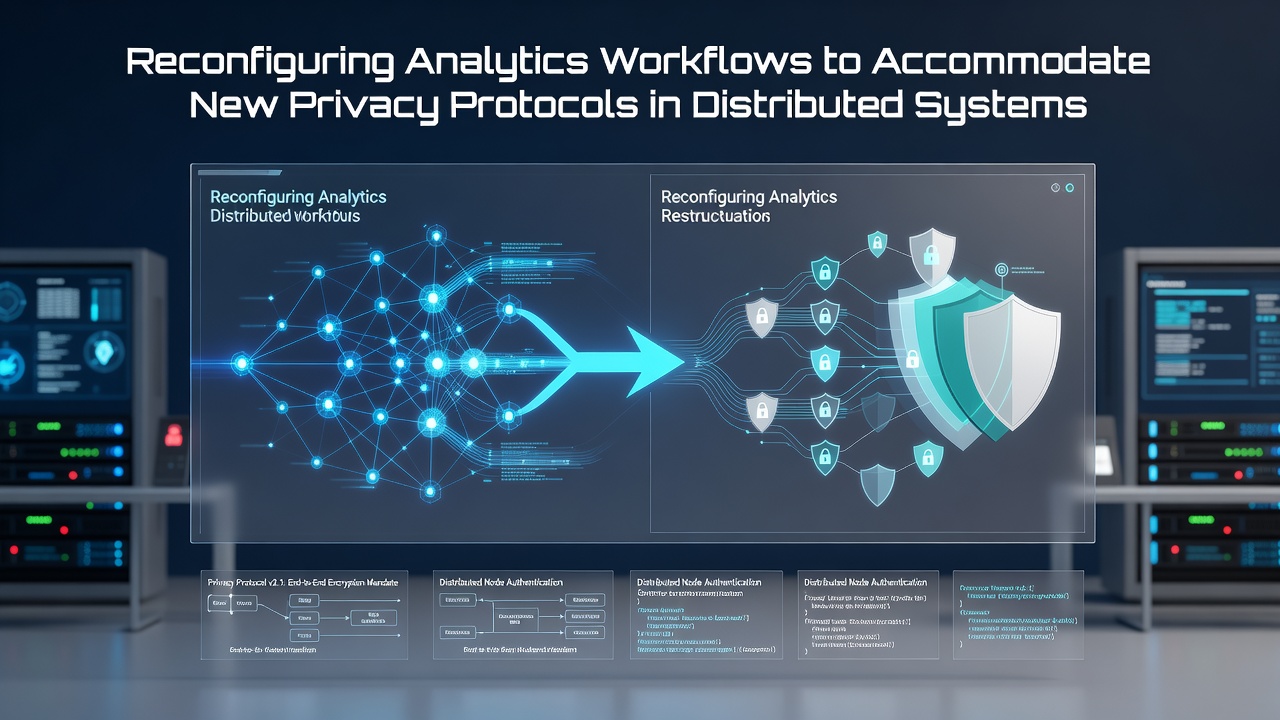
Modern privacy protocols in distributed environments typically incorporate elements such as encryption at rest and in transit, access controls tied to purpose limitation, and techniques that inject noise into datasets before aggregation occurs. Data shows these measures reduce the risk of re-identification while preserving statistical utility, according to findings published by the National Institute of Standards and Technology. Analysts working with multi-region clusters note that protocol compliance requires mapping every data flow to specific legal bases for processing, a step that older centralized systems rarely emphasized.
Organizations reconfigure workflows by inserting privacy-preserving layers at teh ingestion stage rather than applying them retroactively, which avoids bottlenecks later in the pipeline. Studies from academic institutions in Europe and North America reveal that shifting computation closer to the data source through edge nodes cuts transmission volumes and aligns with minimization principles. This approach also supports audit trails that regulators expect to see during compliance reviews.
Technical Adjustments in Workflow Architecture
Teams redesign data pipelines to support federated queries where models train across decentralized datasets without moving the underlying records, a method that gained documented success in sectors handling sensitive location or behavioral information. Implementation involves containerized microservices that enforce consent flags at query time and apply aggregation thresholds automatically. Observers note that such architectures rely on standardized APIs for interoperability, allowing different system components to exchange metadata about privacy status without sharing actual values.
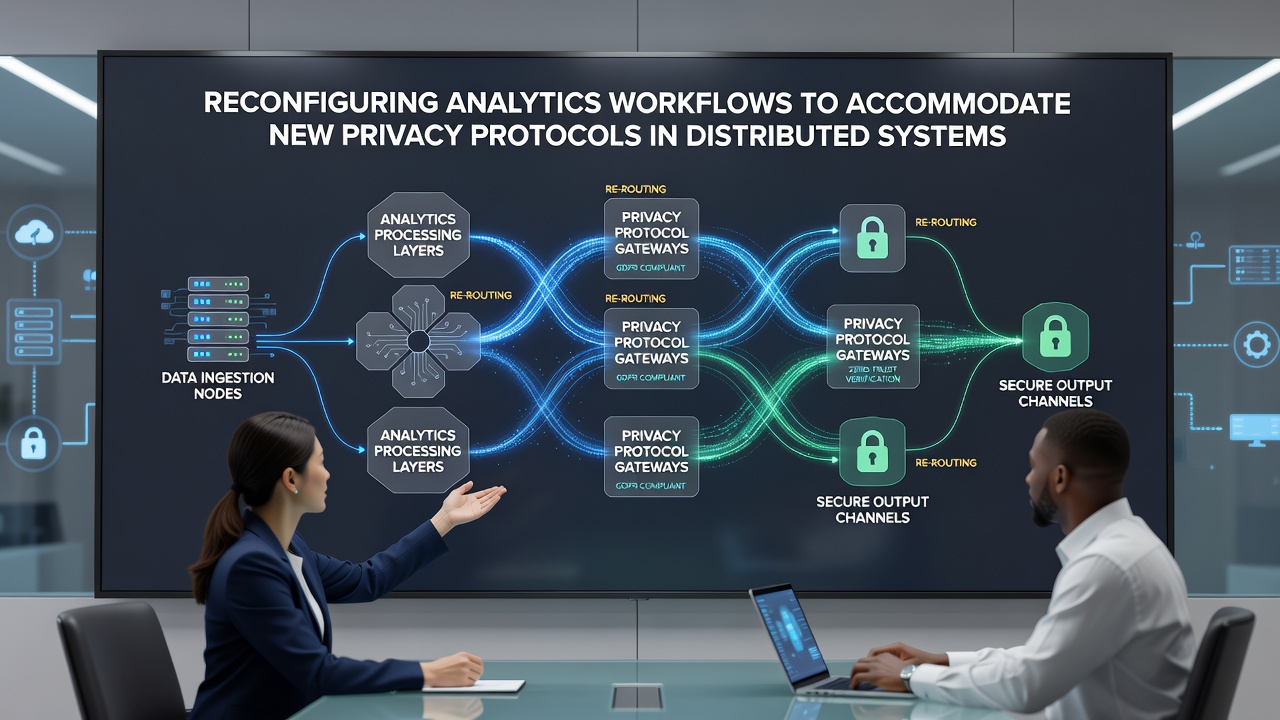
Monitoring tools now track metrics beyond traditional throughput, including the volume of records that trigger deletion requests and the effectiveness of noise addition in maintaining accuracy. Reports from research groups indicate that organizations adopting these metrics achieve faster certification under emerging standards because they can produce logs that satisfy both internal governance and external oversight. Integration with orchestration platforms such as Kubernetes enables dynamic scaling of privacy modules when regulatory thresholds change.
Implementation Patterns Across Industries
Healthcare networks provide one clear example where distributed analytics must balance clinical insights with strict handling of patient identifiers, leading to workflows that tokenize data at collection and route only anonymized aggregates to central repositories. Similar patterns appear in financial services, where transaction monitoring systems apply homomorphic encryption to permit calculations on ciphertexts. Figures from cross-industry surveys compiled by university research centers show that teams completing these reconfigurations within twelve months report fewer interruptions during compliance audits compared with those using incremental patches.
Engineers often begin by conducting a full inventory of data sources and their associated retention policies, then layer protocol enforcement points at each junction. This methodical mapping prevents gaps that could surface during October 2026 reviews, when several jurisdictions plan synchronized enforcement actions. Collaboration between data engineers and legal teams becomes essential because protocol definitions frequently reference both technical standards and statutory language that requires joint interpretation.
Measurement and Validation Approaches
Validation of reconfigured workflows relies on automated testing suites that simulate privacy attacks and measure leakage rates under controlled conditions. Evidence suggests these tests, when run continuously, surface configuration drift before it affects production outputs. External benchmarks published by international standards organizations supply reference datasets that teams use to calibrate their noise parameters and aggregation limits, ensuring consistency across different geographic deployments.
Performance dashboards now surface indicators such as consent revocation latency and the percentage of queries that meet differential privacy epsilon thresholds. Those dashboards draw from distributed logging systems that maintain tamper-evident records, a requirement highlighted in guidance from multiple regulatory agencies. The result is a feedback loop where analytics accuracy and privacy guarantees are evaluated side by side rather than sequentially.
Conclusion
Reconfiguration of analytics workflows for new privacy protocols in distributed systems centers on embedding safeguards at every stage of data movement and processing. Organizations that align technical changes with regulatory timelines, including developments scheduled around October 2026, position themselves to maintain operational continuity while satisfying verification demands from authorities across regions. Continued refinement of these methods depends on ongoing collaboration between technical teams and oversight bodies to keep pace with evolving standards.